2025
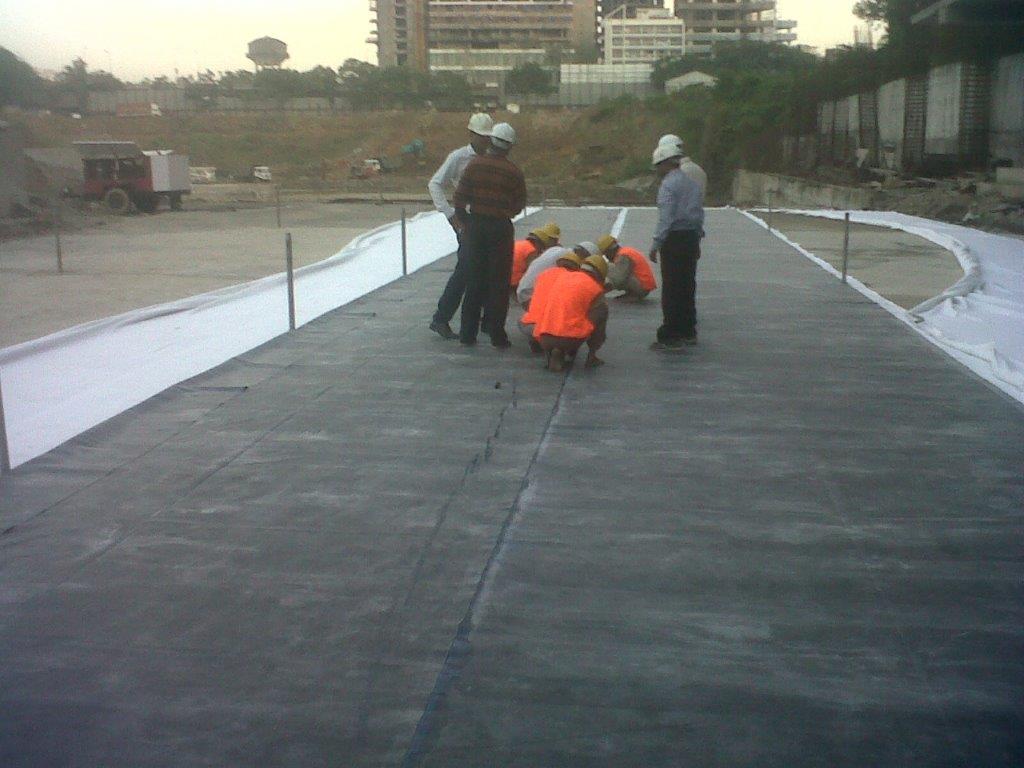
Common Installation Pitfalls with Waterproof Rubber Membrane and How to Avoid Them
Waterproof rubber membranes, like EPDM, thermoplastic (TPO), or elastomeric sheets, are widely used in roofing, terraces, podium decks, basements and green‐roof systems because of their flexibility, durability and excellent water‑resistive performance. Despite their strength, many waterproofing failures trace back to installation mistakes rather than product defects. Recognising and repairing the common pitfalls is the best practice to ensure a long service life of the membrane and prevent leaks.
In this blog, we will explore the typical errors made when installing rubber waterproof membranes and how to avoid them.
Why Good Installation Matters
A UV-resistant rubber membrane is only as good as its weakest detail. Even the best membrane will fail if seams leak, adhesion is weak, or the substrate is unsuitable. In many cases, issues with waterproofing arise not because of faulty materials but due to errors or negligence during installation.
Poor installation can lead to:
- Water pooling and damp patches
- Blistering or delamination of the sheets
- Quick ageing, UV degradation, mechanical wear
- Costly repairs or remedial works down the line
Thus, prevention is always better than cure. Let’s dive into key pitfalls and how to avoid them.
Key Installation Pitfalls & How to Avoid Them
Inadequate base Preparation
Pitfall: The base is left uncleaned, uneven, wet or contaminated, so the membrane fails to bond properly or captures moisture beneath.
How to avoid it:
- Make sure that the surface is clean, dry and it has no debris or dust on it.
- Repair cracks, honeycombing or voids; use appropriate fillers or screeds to bring the base to a level plane.
- Ensure that required slopes or drainage gradients are shaped into the surface before laying the membrane.
- If required, use a primer specified by the membrane manufacturer to promote adhesion.
- Don’t apply the membrane to a frost‑covered, damp or wet surface. In cold climates or early mornings, ensure the surface temperature is above manufacturer minimums (e.g., 5°C).
Choosing the Wrong Membrane or Incompatible Products
Pitfall: Using a water proofing membrane application that isn’t suited to the structure or combining with regular incompatible adhesives, tapes or sealants leads to delamination or failure.
How to avoid it:
- Always check the manufacturer’s datasheet and specifications to confirm compatibility with base, adhesives, primers, and flashing materials to be used.
- Make sure that the membrane is appropriate in thickness, UV resistance, flexibility, and movement tolerance.
- Avoid mixing brands or types unless permitted.
- Use only approved accessory materials, adhesives, flashings, and tapes that the membrane vendor has suggested.
Poor Seams, Overlaps and Edge Terminations
Pitfall: Seams are under‑overlapped, poorly fixed, or left insecurely terminated, which makes weak points for water ingress.
How to avoid it:
- Research on the manufacturer’s minimum overlap dimensions (e.g., 50–75 mm or more, depending on the system).
- Clean and smooth the seam regions before adhesive, tape or welding.
- Apply uniform pressure across the seam for full and proper adhesion.
- Conduct pull tests or seam probes as specified to confirm bond integrity.
- Properly remove edges, vertical upstands, parapets, drains and penetrations with flashings, termination bars or compatible detailing.
- Avoid “floating” overlaps near outlets that obstruct drainage.
Uneven or Insufficient Application (Thickness Variation)
Pitfall: The rubber waterproof coating is applied unevenly, too thin in parts, or insufficiently so that the weakest regions fail too soon.
How to avoid it:
- If applying liquid or semi‑liquid membranes (e.g., elastomeric coatings beneath rubber), make sure that the coverage is uniform and the thickness is proper in every coat before applying the next.
- Use measurement tools or gauges (if provided) to check coverage.
- In sheet systems, avoid stretching the membrane excessively or causing tension that thins key areas.
Weather, Temperature, and Site Conditions
Pitfall: Working in extreme heat, cold, rain or frost can compromise adhesion, curing, or cause blistering on the sheets.
How to avoid it:
- Only install within the temperature range specified by the manufacturer. For example, many membranes should not be applied below 5 °C or on damp/frosted surfaces.
- In hot weather, plan installation for early morning or late afternoon; avoid the peak heat hours in the afternoon or extreme heat temperatures.
- Store membrane rolls and adhesives in shaded, cool areas to prevent pre‑heating or warping.
- If a membrane is unrolled before laying, allow it to relax and acclimatise to ambient conditions (unrolling in advance may reduce stresses).
- Protect freshly laid membrane from rain or dew until fully adhered or cured.
Mechanical Damage, Punctures and Tearing
Pitfall: Membrane is punctured during subsequent trades, backfilling, or due to continuous movement/settlement.
How to avoid it:
- After laying the membrane, immediately protect the membrane with a geotextile layer, protection board or insulation accordingly.
- When backfilling, avoid sharp objects or rocks: use sand or pea gravel cushioning, compact in thin layers.
- Coordinate with trades (plumbers, electricians) so that penetrations are made only after safe placement or preformed flashing is installed.
- If movement joints are expected, design appropriate expansion/joint details so the membrane can flex without tearing.
- Inspect the membrane carefully after each adjacent construction activity.
Poor Drainage and Ponding
Pitfall: Even a perfect membrane will struggle if water is allowed to pond or drainage is obstructed near outlets.
How to avoid it:
- Design and ensure proper falls (gradients) in the base or screed toward outlets or drains before membrane installation.
- Avoid flat zones without drainage direction.
- Make sure outlets are recessed and the membrane detail does not raise a lip or dam around them.
- Do not trap water between layers; avoid sandwiching layers that block vertical moisture egress.
- Clean and maintain guttering, scuppers or drainage points so they do not clog over time.
Comparison of Common Rubber Waterproofing Membranes
| Type | Key Features | Ideal Applications | Lifespan | Pros | Cons |
| EPDM (Ethylene Propylene Diene Monomer) | Synthetic rubber, flexible, UV-resistant | Flat roofs, basements, green roofs | 20–30 years | Durable, excellent weather resistance, easy to install | Not weldable; seams require tape or adhesive |
| TPO (Thermoplastic Polyolefin) | Heat-weldable membrane with reflective surface | Commercial roofs, areas with high sunlight | 15–25 years | UV-reflective (energy efficient), recyclable, weldable seams | Less flexible than EPDM; can shrink over time |
| Butyl Rubber | High elasticity and strong water resistance | Ponds, reservoirs, below-ground waterproofing | 20+ years | Great elongation properties, highly waterproof | More expensive; less UV resistance than EPDM |
| PVC (Polyvinyl Chloride) | Plastic-based, can be heat-welded | Flat roofs, balconies | 15–25 years | Weldable, lightweight, chemical resistant | Can become brittle over time; not as eco-friendly |
| Liquid-Applied Rubber | Applied as a liquid and cures to a rubber membrane | Complex shapes, detailing, repairs | 10–20 years | Seamless finish, great for detailing | Requires careful application for consistent thickness |
Best Practices for a Durable Rubber Membrane Installation:
- Plan ahead: lay out the membrane rolls, cut lengths and detail the zones before starting
- Team coordination: Ensure structural, plumbing, and drainage trades know the sequence of waterproofing.
- Trials: For novel details, build a small trial seam to verify adhesion and method.
- Quality control and proper inspection: At key stages like base priming, seam bonding, and after protection works, inspect and make a detailed report.
- Use specialist installers: Some rubber sheet for waterproofing requires special and skilled installers for the applications to warranty conditions.
- Maintain the installed system: Inspect seams, penetrations, flashings, and drainage periodically to catch the minor issues at early stages.
Frequently Asked Questions
1. Can the waterproof rubber membrane be installed in cold weather?
Yes, but only if the base or surface temperature, adhesive, membrane, and other required materials are under the temperature ranges given by the manufacturer. Some membranes may require special adhesives and heat blankets, when necessary, in low temperatures. Avoid installation when frost or dew is present.
2. How long to wait before backfilling?
One should only backfill once the membrane and any other adhesive layer are fully cured and after placing a protection layer. Timings always depend on the manufacturer’s guidelines. Backfilling too early may lead to disruption or damage.
3. What if I puncture the membrane later on?
Small punctures should be repaired immediately using rubber patches, kits or tapes compatible with the membrane. The repair must extend sufficiently beyond the damage and bond fully. Always inspect regularly after repair.
4. Can I change the brand of adhesive in mid-project?
It’s risky. Only do so if the membrane manufacturer permits the substitute adhesive. Incompatibilities in solvents or adhesives can compromise adhesion and void warranties.
5. How often to inspect the installed waterproof rubber membrane?
A good practice is to inspect at least annually and after extreme weather events. Check seams, flashings, drainage components, and any adjacent construction activity that may affect the membrane.