2025
EPDM Waterproof Membrane for Industrial Warehouses, Why It’s Ideal
Industrial warehouses present demanding requirements for waterproofing for the roofs. With large roof spans, minimal slopes, heavy mechanical loadings, exposure to elements, and the need for long service life, the choice of a waterproof membrane is critical. Among various options, EPDM (ethylene propylene diene monomer) rubber waterproof membranes have emerged over the years as a reliable solution for industrial and commercial applications.
In this blog we will explore what is EPDM waterproof membrane for industrial warehouses, its key features, design, installation and many more things related to it.
EPDM rubber membrane for heavy-duty industrial roofing
EPDM is a synthetic based rubber sheet widely used for waterproofing of the roof. It is made from ethylene, propylene, and a diene component, which allows the rubber to be crosslinked, giving it elasticity, flexibility, and durability.
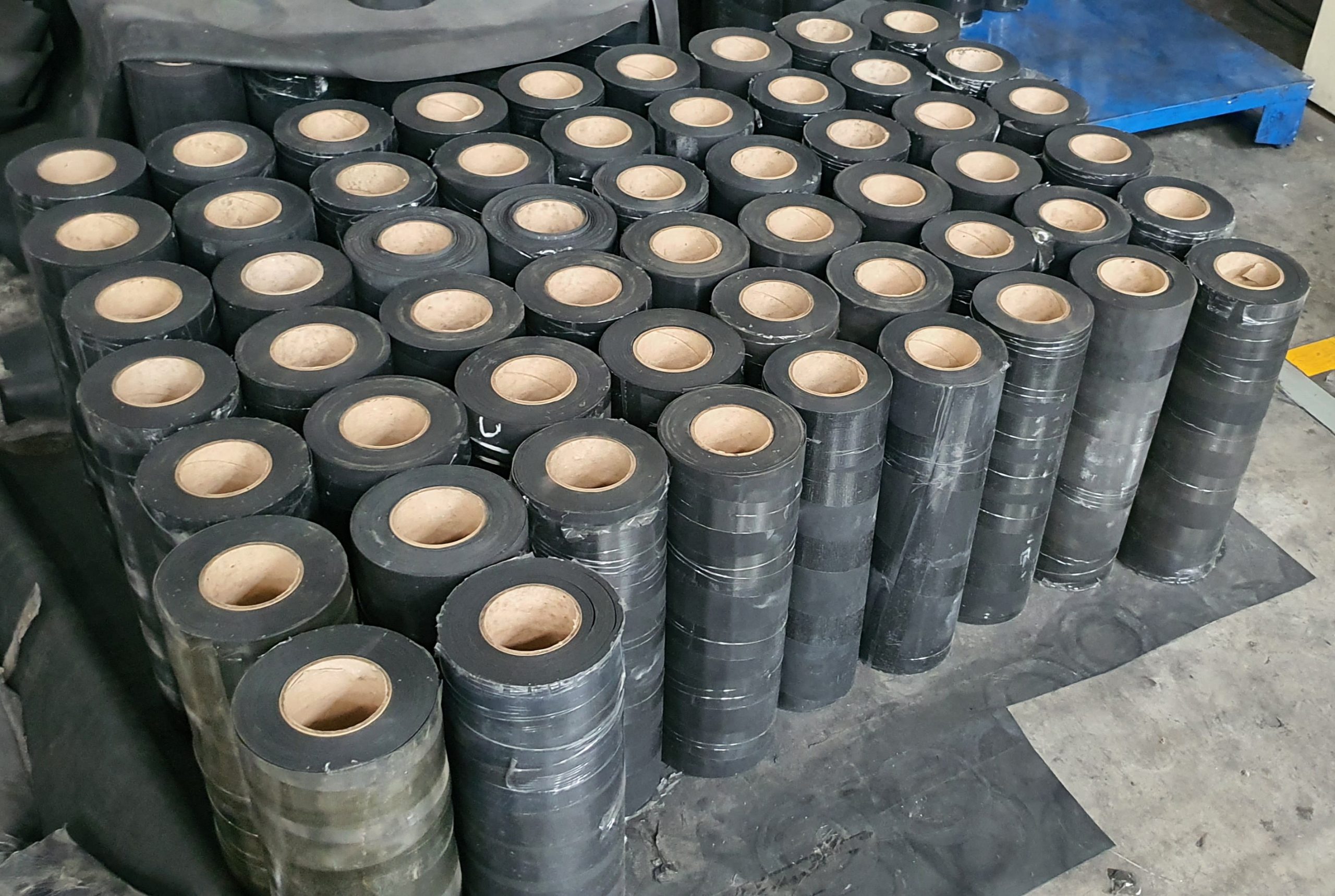
A typical Industrial building EPDM waterproofing is delivered in large rolls. The membrane is laid either fully glued or mechanically fastened. The seams are sealed with adhesive tapes and seam products that are compliant.
As it is a single ply the thickness of EPDM is levelled, and it has no inner layers that may delaminate
Over years of use globally, EPDM has proved reliable in various climates and weather conditions from, temperate to tropical, hot to cold.
Key features and Advantages of EPDM
EPDM membrane has attractive advantages and features that makes it stand out between other rubber sheets for waterproofing.
Weather and UV / Ozone resistance:
EPDM is resistant to UV radiation, ozone and generic atmospheric aging. The carbon black in EPDM acts as a UV stabilizer. This stability helps it maintain its properties over decades of sun exposure.
High elasticity and flexibility:
EPDM membrane can elongate 300% more when expose to various conditions like, weather changes, structural movements, thermal expansions or contractions and minor settling. In cold conditions the sheets remain flexible to avoid wrinkles or cracks on it.
Longevity and Durability:
The EPDM water proofing membrane lasts up to 30 years and more in some cases, if regular inspections are done and it is maintained properly with accurate installation.
Chemical and Pollution resistance:
Industrial areas often expose roofing materials to pollutants, chemicals, oils, or solvents. EPDM holds good resistance against these agents, making it less prone to degradation in aggressive environments.
Reduced Seams:
The EPDM sheets can be delivered in larger width and area, which eventually covers the seams. This reduces the points of failure and makes installation easy with lower labour cost.
Ease in installation and repair:
The installation doesn’t require any flames or torches which makes this process hassle-free. The sheets remain repairable throughout its lifetime.
Lightweight:
EPDM is light per unit area (often around ~1.25 kg/m² for typical thicknesses) so it adds comparatively less load to the structure.
Environmental / Sustainability:
EPDM membranes have low emissions, and at end-of-life can often be recycled or reused in other applications.
Why EPDM is Ideal for Industrial Warehouses
Large Roof Spans and Low Slopes
Warehouses often have low-slope or flat roof designs than long spans. EPDM’s flexibility and ability to form continuous membranes are advantageous in such layouts. Its tolerance to movement and minimal dependence on slope makes it perfect choice for warehouse roofs.
Heavy Mechanical Loads & Foot Traffic
Warehouse roofs may carry HVAC units, cranes, walkways, skylights, or foot traffic during maintenance. EPDM, when specified appropriately, can resist puncture, abrasion, and impact stresses on it.
Exposure to Industrial Pollutants
Warehouses release or encounter chemical vapours, dust, oils, or pollution. EPDM’s chemical resistance helps reduce degradation or performance loss under such exposure to chemicals.
Hard-to-Access Roofs
Many warehouses have limited roof access. A membrane that requires low maintenance and minimal requires repair is beneficial in such cases. EPDM’s durability and repairability reduce long-term interruption.
Safety in Installation
As EPDM can be installed without open flame torches, it reduces fire risk during installation, especially important in industrial areas with flammable materials or strict safety codes.
Thermal Cycling & Local Climate
Warehouses in hot climates or areas with large diurnal temperature swings put stress on roofing materials. EPDM’s ability to stretch and accommodate the changes helps prevent cracking or failures in such conditions
In sum, EPDM matches many of the functional requirements of industrial warehouse roofing, from durability and flexibility to safety and lifecycle advantages.
Design & Installation Considerations
To realize EPDM’s advantages, proper design and installation are necessary. Below are best practices which can be done.
Membrane Thickness & Grade
Choose a membrane thickness suitable for loads and traffic accordingly. Typical thicknesses for industrial roofs might be 1.2 mm, 1.5 mm, 2.0 mm or more than that for areas with heavy equipment or traffic.
Consider reinforced EPDM (with scrim or fabric reinforcement) where increased tear strength is needed.
Attachment Method
- Fully Adhered: Membrane glued to the base via adhesive; gives strong bond and helps resist wind uplift during extreme conditions.
- Mechanically Fastened: Membrane is fastened with screws and plates that are appropriate for retrofit or when adhesion is difficult.
- Ballasted: Membrane is loose-laid and held by ballast (e.g. gravel, pavers), often with mechanical anchors.
Choice depends on surface condition, wind loads, building use, and access.
Seaming and Detailing
Seams must be sealed with approved tapes or adhesives and closed properly. Seam quality is critical as most of the membrane failures occur at seams rather than in the field membrane.
Terminations, flashings at parapets, penetrations, corners, drains, and expansions must be detailed carefully with compatible accessories.
Substrate Preparation
The roof deck or the base must be clean, dry, and smooth. All protrusions, irregularities or sharp edges should be removed or covered before laying the membrane. Moisture must be controlled as EPDM Rubber Waterproofing Sheets Membrane should not trap moisture under the membrane.
Slope and Drainage
Even though EPDM tolerates low slopes, a slight slope (e.g., 1–2 %) is recommended to avoid ponding on the roof. Ponded water over long duration may increase membrane deterioration.
Flashing & Edge Termination
Proper flashing at roof edges, parapets, walls, and penetrations is important. Use dedicated flashing accessories, termination bars, cover strips, or counterflashing as needed.
Inspection & Maintenance
Though EPDM is low-maintenance, periodic roof inspections (e.g. annually or after severe storms) are advised to avoid problems. Look for seam lift, punctures, debris or damage. Prompt repair helps maintain service life.
Comparison: EPDM vs PVC / TPO Single-Ply
| Feature / Parameter | EPDM | PVC / TPO Single-Ply |
| Seams | Fewer (large rolls), closed with tape or adhesives | Welded seams (TPO / PVC) |
| UV / Weather Resistance | Excellent inherent resistance | Good, depends on formulation |
| Flexibility / Movement | Very high elongation, tolerant of thermal movement | Moderate to good |
| Installation Safety | No flame required | Usually flame-free (heat welding) |
| Repairability | Easy to patch / retrofit | Good (patching, seam welding) |
| Lifespan / Durability | 25–35+ years | 20–30 years |
| Cost (initial) | Moderate to higher | Moderate |
| Weight | Lightweight | Lightweight |
| Chemical Resistance | Strong | Good (depends) |
| Maintenance Needs | Low | Low |
Frequently Asked Questions
1. Is EPDM suitable for heavy foot traffic?
EPDM can handle light-to-moderate maintenance traffic, but for frequent or heavy traffic (e.g. forklifts), top protection (walkway pads) is recommended.
2. Does EPDM shrink over time?
Some membrane shrinkage may occur over decades, especially if not properly installed. But high-quality EPDM, properly installed with allowances for proper movement, can maintain stability within limits.
3. Can EPDM be applied over an existing roof?
In many cases, yes! Provided the existing base is sound, clean, and prepared, EPDM may be laid (mechanically fastened or adhered) over it. However, compatibility and structural considerations must be checked.
4. How often should an EPDM roof be inspected?
It’s necessary to inspect annually, and after severe weather events. Check seams, flashing, penetrations, debris accumulation, and any signs of membrane damage. Prompt repairs help extend life of Industrial EPDM membrane.
5. What is the typical warranty period?
Many manufacturers offer warranties of 20–30 years, assuming proper installation and maintenance.
For industrial warehouses, where demands are high and failures cost dearly, Long-lasting waterproof membrane for industrial offer an excellent balance of performance, durability, safety, and repairability. With strong resistance to weathering, high elasticity, fewer seams, and relatively lower maintenance, EPDM can be an ideal long‑term solution.