2025
How Waterproof Rubber Membrane Revolutionizes Flat Roof Waterproofing in Tropical Climates
Tropical climates create unique challenges for architecture. Due to the combination of high humidity, intense heat, frequent heavy rainfalls and occasional storms, the buildings in the tropical area need advanced solutions that help them to guard against these situations, especially for flat roofs. Sloped roofs naturally shed water, but flat roofs often retain moisture for a longer time, which increases the chance of leaks, cracks and structural damage.
Enter the waterproof rubber membrane, a game changer for these problems in modern roofing. It is a flexible, durable and resilient sheet that has completely transformed the approach for flat roof waterproofing in tropical areas.
Let’s explore how durable rubber waterproofing membrane is a solution for flat-roof architectural structures in this blog.
Why flat roofs struggle in the tropics
Flat roofs are a popular choice for modern and minimalist architectural designs. They offer usable rooftop space, ease of construction, and aesthetic appeal. But their flat roof is also a weak point in tropical areas.
Challenges flat roofs face in tropical climates:
- Heavy rainfall: Frequent and intense rainfall can overwhelm drainage systems, leading to standing water and seepage.
- UV radiation: Constant sun exposure degrades many traditional roofing materials.
- Thermal expansion: Daily heat and cool cycles cause materials to expand and contract eventually, which leads to cracks.
- High Humidity: Promotes growth of mould, mildew and algae expansion, which can damage roofing materials and reduce their lifespan.
- Storm conditions: High winds and cyclonic activity can rip up poorly secured waterproofing layers.
These factors demand a waterproofing solution that is not only tough but also adaptable—and that’s where Liquid waterproof rubber membranes excel.
What is a Waterproof Rubber Membrane?
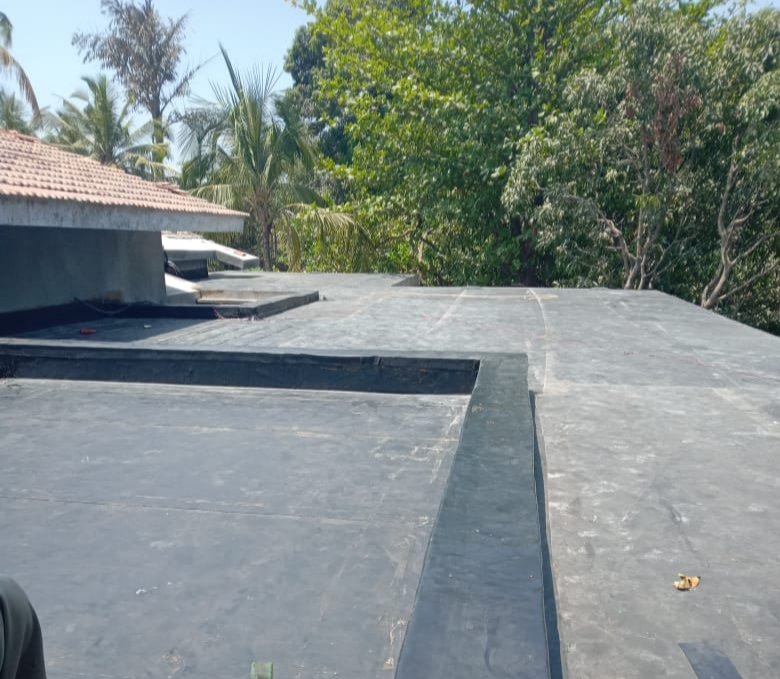
A rubber membrane is a synthetic, elastomeric sheet used to cover flat roofs, delivering a seamless and impermeable barrier against water and weather. The most commonly used type in tropical climates is EPDM (Ethylene Propylene Diene Monomer) rubber.
It is designed to face the extreme climatic conditions, making it ideal for structures in hot, wet environments.
How rubber membranes are revolutionizing Waterproofing
Rubber membranes are not just another roofing material; they are a technological advancement. Here’s how they are setting new standards:
Superior Waterproofing Performance
- Rubber membranes provide a completely watertight seal, even around joints and penetrations.
- Their flexibility ensures that even when the roof structure moves or settles, the membrane remains intact accordingly.
Resilience in Extreme Weather
- Resistant to UV radiation, ozone, and major temperature changes.
- Maintains performance during tropical storms and cyclones.
Seamless Installation
- As these sheets are available in large rolls, they reduce the number of seams where leaks usually start.
- Heat-welded or adhesive-applied seams create monolithic protection.
Low Maintenance
- Rubber membranes require minimal maintenance once installed compared to other traditional membranes.
- They’re easy to clean and naturally resistant to algae and mould growth.
Long Lifespan
- EPDM Rubber sheet for leak-proof roofing can last 30-50 years when installed correctly.
- They offer long-term value with minimal degradation over time compared to other waterproofing.
Comparison Table: Rubber Membrane vs. Traditional Waterproofing Systems
| Feature | Rubber Membrane (EPDM) | Bitumen/Asphalt Systems | Liquid Waterproofing |
| Lifespan | More than 30 years | 12-15 years | 6–10 years |
| UV Resistance | Exceptional | Poor | Average |
| Installation Time | Rapid | Moderate to slow | Quick |
| Seams and Joints | Few or seamless | More, increases leaks | Seamless, but delicate |
| Maintenance | Low | High | Medium |
| Cost (Long-Term Value) | High at the initial stage, low long-term | Low in the initial stage, high upkeep | Medium cost and decent durability |
| Tropical Suitability | Excellent | Poor | Fair |
Advantages of Rubber Membrane in Tropical Climates
Let’s break down the unique advantages that make rubber membranes a preferable option in tropical areas:
- Resistance to Ponding Water
Flat roofs often have poor drainage. EPDM rubber doesn’t deteriorate even when water sits on it for days.
- UV and Heat Resistance
Unlike tar-based materials that crack or melt under the tropical sun, rubber membranes remain stable and effective.
- High Flexibility
This membrane expands and contracts without tearing, making it perfect for buildings that experience daily thermal cycling.
- Algae and Mold Resistance
Tropical humidity encourages biological growth, but EPDM’s non-porous surface inhibits mould and mildew.
- Storm Proofing
Its strength and elasticity help withstand strong winds and flying debris—critical during cyclones or monsoon storms.
Installation: Simple yet Strategic
Though installation is quicker and more straightforward than traditional methods, it still requires trained professionals to deliver optimal performance.
Basic Installation Steps:
- Base preparation – Ensure the roof deck is clean, dry, and smooth without any debris on it.
- Membrane layout – Cut the rubber to size accordingly and lay it over the surface.
- Adhesion – Secure with adhesive or mechanical fasteners that are compliant and approved by manufacturers.
- Seam sealing – Weld or glue seams for watertight protection.
- Detail work – Seal penetrations, drains, and edges with precision and perfection.
Eco-friendly roofing
Rubber membrane roofing isn’t just strong and long-lasting—it’s also a sustainable option to secure the ecosystem for environment conscious buildings, especially in tropical climates.
- Made from recycled materials
Many rubber membranes are made from recycled rubber that helps to reduce the waste and save the cost of raw materials as well.
- Energy-efficient
The insulating properties of roof rubber membranes help to reduce the internal heat buildup, which eventually reduces the demand for air conditioning.
- Fully recyclable
Rubber membranes can be recycled at the end of their lifespan, which prevents landfill waste and also supports sustainable construction practices.
- Supports green roof systems
These rubber membranes are compatible with green roofs, allowing the vegetation to grow on rooftops for added insulation.
- Ideal for solar integration
They provide a stable and durable base for installing solar panels, making it easy to combine roofing with renewable energy solutions.
In short, rubber membranes offer more than just waterproofing—they support energy savings and environmental responsibility, making them an ideal choice for modern roofing.
Common Applications in Tropical Regions
Rubber membranes are flexible, and they are used across various structures in tropical zones:
- Residential flat roofs
- Commercial buildings
- Schools and universities
- Warehouses
- Government buildings
- Rooftop gardens and terraces
Tropical climates present constant challenges, but innovative materials like water proof rubber membranes are changing the game. With exceptional resistance to moisture, extreme heat, and organic growth, these membranes offer reliable, long-term protection for flat roofs, even in the harshest conditions.
Frequently Asked Questions
1. Is rubber membrane roofing expensive?
While the upfront cost is higher than some traditional materials, it offers superior durability and low maintenance, making it cost-effective long-term
2. Can I install rubber membranes myself?
It’s not recommended. Professional installation ensures a watertight seal, especially around seams and edges.
3. Does the membrane need a protective top layer?
In high-traffic areas or places prone to puncture, adding a ballast or paver system is advised for extra protection.
4. How do I maintain a rubber roof?
Regular inspections (twice a year), debris removal, and cleaning with mild soap are usually sufficient.
5. Are rubber membranes eco-friendly?
Yes. Many are made from recycled rubber, are energy efficient, and can be recycled again at the end of their life.