2026
EPDM Pond Liner vs Concrete Pond: Which Is Better for Farm Water Storage
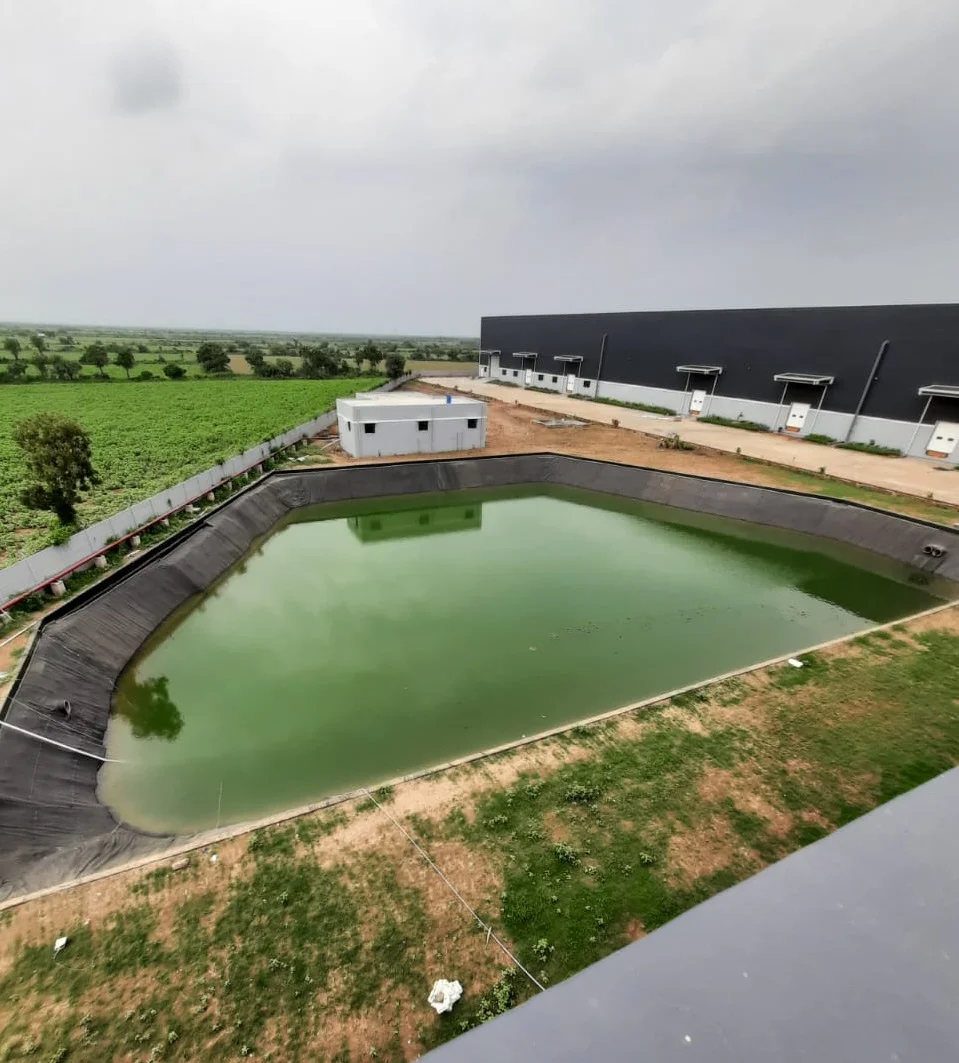
Water is the foundation of every productive farming operation. Whether you are storing it for irrigation, livestock, or dry season reserves, the structure holding that water must perform reliably for years without draining your maintenance budget.
When it comes to farm pond construction, most decisions come down to two materials: EPDM rubber liners or concrete. Both are widely used. But they respond very differently to climate stress, soil movement, and long-term cost demands.
If you are planning a new farm pond or dealing with an ageing concrete structure that is starting to fail, this guide will help you make the right decision before you spend money in the wrong direction.
Why Farm Ponds Fail
Most farm pond problems trace back to two causes: cracking and seepage.
Concrete pond cracking in winter is one of the most expensive and frustrating issues facing farmers in cold climates. Concrete is a rigid material. When ground temperatures fall, soil contracts and shifts. Concrete cannot move with it. Instead, it resists, and over time that resistance produces hairline fractures that grow into visible cracks. Each freeze-thaw cycle makes the damage worse. Once a crack forms, water escapes into the surrounding soil, the structure weakens further, and repairs become costly and disruptive to farm operations.
Seepage is the quieter problem. A pond that looks completely intact on the surface can still be losing significant volume every day through microscopic fractures or poorly sealed construction joints. Over an irrigation season, that invisible loss reduces your available water supply exactly when crops or livestock need it most.
Both problems are preventable with the right pond liner system from the start.
Understanding EPDM as a Farm Pond Solution
EPDM (Ethylene Propylene Diene Monomer) is a synthetic rubber membrane designed for long-term outdoor water containment. It is flexible, fully waterproof, and engineered to handle the kind of environmental stress that farm ponds face every season.
Unlike concrete, EPDM moves with the ground rather than fighting it. It expands and contracts with temperature changes without losing its watertight seal. This makes it one of the most dependable freeze thaw resistant pond liner materials available for agricultural use anywhere in the world.
What makes EPDM practical for farm use:
- Adapts to uneven and sloped terrain without extensive groundwork
- Creates a seamless waterproof barrier with no joints or seams to fail over time
- Available in fish-safe and livestock-safe grades for aquaculture and drinking water applications
- Simple to repair using standard patch kits if accidental damage occurs
- Rated lifespan of 30 to 50 years with minimal ongoing maintenance
As a waterproof membrane for farm pond applications, EPDM has become the preferred choice across the USA, UK, Europe, and Australia because it solves the two core problems of cracking and seepage at the same time.
EPDM Pond Liner vs Concrete Pond: Side-by-Side Comparison
| Factor | EPDM Pond Liner | Concrete Pond |
| Upfront Cost | Lower | Higher |
| Installation Time | 1–3 days | Several weeks |
| Freeze-Thaw Resistance | Excellent | Poor |
| Seepage Risk | Very low | Moderate to high |
| Terrain Flexibility | High | Low |
| Repair Complexity | Simple patching | Costly and disruptive |
| Lifespan | 30–50 years | 15–25 years with repairs |
| Fish and Livestock Safe | Yes | Depends on surface coating |
Farm Pond Construction Cost: Where the Numbers Really Differ
When comparing rubber pond liner vs concrete cost, most farmers focus only on material pricing. The real difference lies in the total project cost over time.
Concrete pond construction involves professional contractors, heavy equipment, precise ground levelling, formwork, pouring, curing periods, and often an additional waterproofing render applied after the concrete sets. The pond cannot be used until the entire process is complete, which can take several weeks. That is both a financial cost and an operational delay that affects farm planning.
EPDM liner systems require far less site preparation, can be installed in one to three days, and are ready to fill immediately after anchoring. No curing. No waiting.
The longer-term picture is even more significant. Concrete ponds in cold climates typically need crack repairs every few years. Each repair requires draining the pond, cleaning and preparing the damaged surface, patching, and refilling. Labour, downtime, and materials combine to make concrete maintenance a recurring expense that compounds over time.
EPDM repairs are straightforward patch applications that take hours, not weeks, and rarely require full pond drainage.
When evaluating farm pond construction cost across a 15 to 20 year horizon, EPDM consistently delivers lower total expenditure for most agricultural water storage applications.
Agricultural Water Retention: Why Every Litre Counts
Water storage for irrigation is only as reliable as the containment holding it. A farm pond losing 10 to 15 percent of its volume each season through seepage is not just wasting water. It is reducing your available irrigation capacity at exactly the point in the season when demand is highest.
A rubber geomembrane for agriculture creates a fully sealed system where every litre collected stays in the pond. Rainfall, surface runoff, borehole supply, and pumped water are all retained without loss. That level of retention reliability matters during drought restrictions, summer dry spells, and any period when external water supply is limited or expensive.
Beyond irrigation, EPDM pond liners support a wide range of farm water storage needs:
- Livestock and cattle watering points requiring clean, stable water supply
- Aquaculture and fish farming where water quality and volume must be maintained
- Rainwater harvesting systems capturing roof or field runoff
- Fire reserve storage on rural properties where pond integrity must be guaranteed
Case Study: Solving a Long-Term Seepage Problem in the Midwest USA
A grain farm in Illinois had been managing a two-acre irrigation pond built on a concrete-lined base nearly 18 years earlier. Each summer, water levels dropped faster than evaporation could account for.
Inspection confirmed what the farm manager had suspected. Freeze-thaw cycles over nearly two decades had introduced multiple cracks across the concrete base and lower walls. Two separate patch repair attempts over five years had each held for one season before new fractures appeared elsewhere.
Rather than demolishing and rebuilding the entire structure, the farm opted to install an EPDM liner over the existing concrete base, using a protective geotextile underlay to smooth surface irregularities before liner placement.
Results after the first full irrigation season:
- Seepage dropped to near zero
- Available irrigation water increased by over 18 percent compared to the previous year
- Total installation cost was approximately 40 percent less than the best quote received for full concrete reconstruction
- The pond was operational again within four days of work starting
The farm manager noted that the speed of turnaround was as valuable as the cost saving. During a dry spring, four days of downtime versus six weeks of reconstruction made a direct difference to crop planning.
Pond Liner Installation: What the Process Looks Like
One of the practical advantages of choosing a rubber geomembrane for agriculture is how straightforward installation is compared to concrete construction.
- Site preparation — Clear the pond area of sharp rocks, roots, and debris. Install a geotextile underlay to protect the liner base.
- Liner placement — Roll the EPDM membrane out across the pond and allow it to drape naturally into the shape without mechanical pressure.
- Edge anchoring — Secure the liner perimeter into anchor trenches using appropriate fixing strips to prevent movement.
- Fill and inspect — Fill the pond immediately after anchoring. Water weight settles the liner firmly into position as filling progresses.
The process requires no specialist machinery, no curing periods, and no extended site closure. Most farm pond installations are completed and operational within one to three days.
Final Thoughts
Concrete ponds have been a standard part of farm infrastructure for generations. Yet frequent repair bills, winter cracking issues, and persistent seepage have made them a costly and unreliable option for today's farming demands.
EPDM pond liners offer greater flexibility, stronger pond seepage prevention, better climate resilience, and significantly lower lifecycle costs. For farms that depend on reliable agricultural water retention and consistent water storage for irrigation, the practical case for EPDM is clear.
Contact Polygomma today to discuss EPDM pond liner solutions built for large-scale agricultural water storage and long-term farm performance.