2026
Torch-On Membranes vs EPDM Membrane Waterproofing: Fire Risk, Site Safety and Insurance Considerations
Selecting a waterproofing system for a commercial roof involves more than keeping water out. Have you considered the fire risks, site safety requirements and insurance implications of your chosen installation method? Torch-on membrane fire risk is a key consideration when comparing traditional bitumen roofing with EPDM cold-applied waterproofing.
The right system can help reduce installation hazards while providing reliable protection against water ingress. Before making a decision, consider:
- Fire safety: Torch-on membranes use an open flame that can ignite concealed combustible materials.
- Site operations: Flame-free methods can be useful when offices, warehouses or other buildings remain occupied.
- Insurance requirements: Contractors and property owners must understand applicable safety conditions and policy requirements.
Understanding these factors helps you select a waterproofing system that suits your building, budget and safety priorities.
Torch-On Membranes vs EPDM: What Is the Difference?
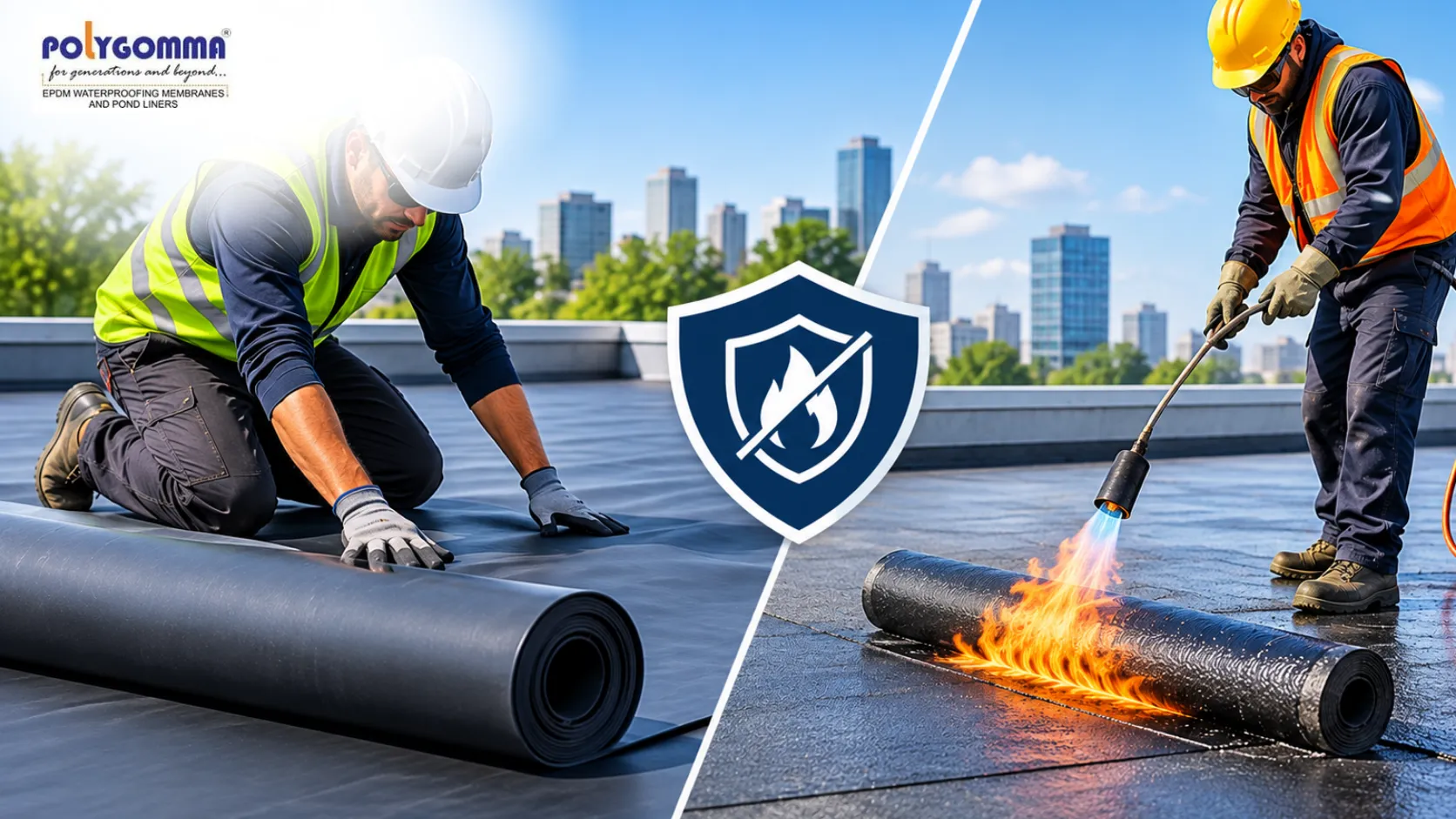
Torch-on membranes typically use modified bitumen heated with a gas torch to bond the material to the roof. EPDM, or ethylene propylene diene monomer, is a synthetic rubber membrane installed using compatible adhesives, mechanical fasteners or ballast, depending on the system.
| Factor | Torch-on membrane | Adhesive-bonded EPDM |
| Installation | Open-flame application | Cold-applied adhesive |
| Fire exposure | Higher ignition risk during torch work | No open flame for membrane bonding |
| Site precautions | Strict hot-work controls | Adhesive handling and ventilation controls |
| Occupied buildings | Requires careful fire-risk management | Can reduce disruption associated with hot work |
| Suitability | Depends on roof construction and project conditions | Depends on substrate, adhesive and system design |
Both systems can provide effective waterproofing when correctly specified and installed. The main difference is the installation process and its associated hazards.
Understanding Torch-On Membrane Fire Risk
Torch-applied bitumen is widely used on flat and low-slope roofs. However, the heat generated during installation can create hazards beyond the immediate work area.
Common risks include:
- Hidden combustible materials: Heat can ignite timber, insulation, debris or other materials beneath the roof surface.
- Roof penetrations: Gaps around pipes, ducts and rooflights may allow heat to reach concealed spaces.
- Delayed fire detection: Materials can smoulder after work finishes, allowing a fire to develop unnoticed.
- Commercial property damage: A fire during re-roofing can threaten stock, equipment, occupants and neighbouring premises.
Roofing fire accidents vary by location, building type and installation method, so general statistics should not replace a project-specific fire risk assessment. Contractors must understand the roof construction and identify potential ignition sources before work begins.
Is EPDM a Safer Alternative to Torch-On Roofing?
A no-flame waterproofing system can reduce ignition hazards by removing the need for an open flame during membrane application. An adhesive-bonded EPDM membrane can be particularly useful for refurbishment projects where a building remains operational or concealed roof spaces are difficult to inspect.
However, flame-free installation does not mean risk-free installation. Some adhesives contain solvents that require careful storage, ventilation and ignition-source control. Where suitable, a solvent-free bonding adhesive roofing solution may address certain concerns, provided it is compatible with the membrane and substrate.
Before installation, contractors should:
- Check the substrate: Ensure the roof is sound, clean and suitable for the proposed system.
- Follow adhesive instructions: Observe application temperatures, ventilation requirements and curing times.
- Verify fire performance: Check the classification of the complete roof assembly, not just the membrane.
- Assess weather conditions: Confirm that moisture and temperature levels meet the manufacturer's requirements.
For projects prioritising flame-free flat roof waterproofing, EPDM can be a practical alternative, subject to proper system selection and installation.
Site Safety: Essential Precautions for Roofing Work
Effective site safety waterproofing begins with planning. The method statement should account for the roof structure, nearby combustible materials, access arrangements and building occupancy.
For torch-on applications, a hot works permit roofing procedure may be required by site rules, insurers or contractual obligations. Contractors working in the United States should also consider applicable OSHA construction fire-safety requirements, local fire codes and relevant NFPA standards.
Important precautions include:
- Before work: Inspect the roof, identify hazards and protect vulnerable openings.
- During installation: Control ignition sources, maintain good housekeeping and store gas cylinders or adhesives safely.
- After installation: Inspect the work area thoroughly and continue fire monitoring for the duration required by site safety procedures.
These measures are particularly important during occupied building re-roofing, where a fire could disrupt business operations and put people at risk.
Roofing Contractor Insurance Liability: What Should You Check?
The chosen waterproofing method can influence risk management, but neither EPDM nor torch-on roofing automatically guarantees insurance cover or lower premiums.
Before approving the work, property owners and contractors should review:
- Property insurance: Check requirements for hot-work permits, fire watches and insurer notification.
- Contractor liability: Confirm appropriate insurance cover and clearly defined contractual responsibilities.
- Project records: Retain risk assessments, method statements, permits and inspection reports.
- Fire classification: Verify whether the roof assembly meets the required Class A or other applicable fire-performance standard.
A property insurance roofing claim may be investigated against the circumstances of the incident, policy wording and safety precautions taken. A flame-free system can remove one significant ignition source, but other risks remain.
Which Waterproofing System Should You Choose?
The right choice depends on roof construction, building use, fire requirements and installation conditions.
| Project requirement | What to consider |
| Open flames are restricted | Adhesive-bonded EPDM |
| Roof contains concealed cavities | Assess a flame-free installation method |
| Existing bitumen roof needs refurbishment | Check compatible repair or replacement options |
| Building remains occupied | Prioritise reduced ignition exposure and minimal disruption |
| Specific fire ratings apply | Verify the complete roof assembly |
For commercial properties, the safest waterproofing membrane is one that meets the building's performance requirements and can be installed under properly controlled conditions. Review the manufacturer's specifications and consult relevant safety professionals before finalising the system.
Make Your Roofing Project Safer
Do not wait until installation begins to discover that your chosen waterproofing method creates avoidable fire risks or conflicts with insurance requirements. Assess the roof, review site safety procedures and confirm the required fire performance before approving the specification.
Contact Polygomma to discuss suitable waterproofing solutions for your project. Taking action at the planning stage can help reduce installation risks, avoid unnecessary delays and support long-term roof protection.
Frequently Asked Questions
1. Is EPDM safer than a torch-on membrane?
EPDM installed without an open flame removes the ignition risks associated with torch-applied membrane bonding, although other installation hazards remain.
- Cold process roofing USA: Assess the complete roof system and installation conditions.
- Adhesive safety: Follow ventilation and storage requirements.
- Fire prevention: Keep other ignition sources under control.
2. Can torch-on roofing cause a building fire?
Yes. Heat can ignite concealed combustible materials, and fires may not become visible immediately.
- Propane torch roofing risk: Inspect roof penetrations and concealed spaces.
- Fire prevention: Use appropriate risk assessments and permits.
- Post-work monitoring: Follow specified fire-watch procedures.
3. Does EPDM reduce roofing insurance risks?
It can reduce exposure to open-flame installation hazards, but insurance outcomes depend on policy terms and project circumstances.
- Property insurance roofing claim: Review exclusions and notification requirements.
- Contractor documentation: Keep safety records and inspection reports.
- Policy compliance: Confirm requirements with the insurer.
4. What is a hot-work permit for roofing?
It is a formal authorisation process for work involving flames, heat or sparks, setting out the required precautions.
- Site requirements: Check applicable regulations and insurer conditions.
- Fire controls: Document protective measures and emergency procedures.
- Fire watch: Follow the required inspection arrangements.
5. Is EPDM suitable for commercial flat roofs?
Yes, EPDM can suit many commercial flat and low-slope roofs when the system is properly specified.
- Roof design: Check drainage, substrate and attachment requirements.
- Fire performance: Verify the complete roof assembly's classification.
- Maintenance: Inspect seams, penetrations and drainage points regularly.
6. Does a Class A roofing membrane mean the roof is fireproof?
No. Class A describes performance under a specified fire-test classification. It does not mean the roof is immune to every fire scenario.
- Assembly testing: Check the complete roof construction.
- Building regulations: Confirm the applicable local requirements.
- Product documentation: Request evidence of the relevant fire classification.