2026
Cold Climate Pond Liners: Why EPDM Outperforms Other Materials Through Freeze-Thaw Cycles
A pond should be built to last for decades, not just until the first harsh winter. Yet many pond owners discover leaks, cracks, or unexpected repairs after repeated freezing and thawing begin affecting the liner beneath the surface. Whether you are designing a garden pond in Scotland, installing a koi pond in northern England, or managing a commercial water feature in Canada or the northern USA, choosing the right cold climate pond liner is one decision that can determine how well your investment performs over time.
While many buyers compare thickness, price, or installation costs, these factors only tell part of the story. The real challenge is selecting a material that can remain flexible when temperatures drop and continue performing after years of seasonal movement.
Before choosing a pond liner, ask yourself:
- Will the liner remain flexible after several winters?
- Can it cope with repeated freezing and thawing without cracking?
- Is it suitable for irregular pond shapes with shelves or waterfalls?
- Will replacing a cheaper liner cost more in the long run?
Understanding these questions makes it much easier to select a pond liner for cold weather that delivers lasting performance rather than short-term savings.
Why Freeze-Thaw Cycles Put Pond Liners Under Pressure
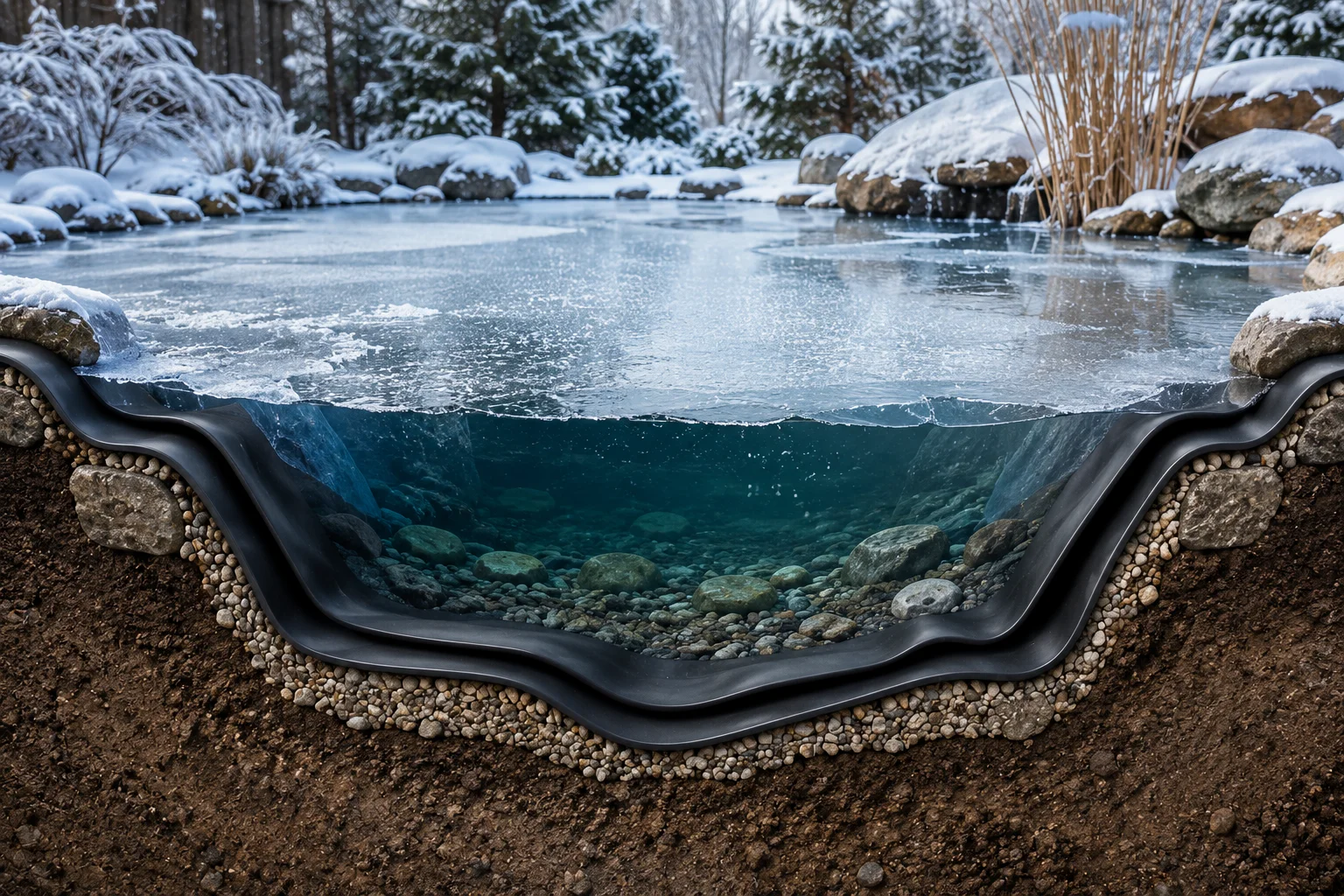
Winter does far more than freeze the surface of a pond. As temperatures fluctuate, water expands into ice, surrounding soil shifts, and the ground repeatedly contracts before settling again. This constant movement places pressure on every part of the liner, especially around corners, shelves, edging stones, and waterfall features.
Unlike a single cold spell, repeated freeze-thaw cycles create ongoing stress. A liner may flex dozens of times throughout the season, making material flexibility just as important as strength.
Here's what happens beneath the surface during winter:
Ground movement
Frozen soil expands as moisture turns to ice. When temperatures rise, the ground settles back into place. This continuous movement gently pulls and pushes against the liner, increasing stress over time.
Ice expansion
Water naturally expands as it freezes. Although ponds are designed to accommodate this change, the pressure created by expanding ice can place additional strain on rigid liner materials.
Material fatigue
Some liners gradually become stiff in colder conditions. Once flexibility is lost, repeated movement concentrates stress in the same areas, making cracks or splits more likely after several winters.
Instead of resisting these natural forces, the most durable liners move with them. This simple difference often determines whether a pond remains watertight for decades or requires costly repairs after only a few seasons.
Thickness Is Important, But Flexibility Matters More
One of the biggest misconceptions is that a thicker liner automatically offers better protection. While thickness certainly improves puncture resistance, it does not guarantee better performance in freezing conditions.
Imagine bending a rigid plastic sheet repeatedly over several years. Eventually, stress begins building around the same folds until the material weakens. Now compare that with a flexible rubber sheet. Rather than concentrating pressure in one location, it bends naturally and continues adapting without creating permanent stress points.
The same principle applies beneath a pond.
When choosing the best pond liner for freezing temperatures, flexibility often has a greater impact on long-term performance than thickness alone.
Three characteristics every winter-ready liner should offer
Rather than focusing solely on liner thickness, look for these essential qualities:
Excellent elasticity
Materials that remain supple in freezing weather are less likely to crack as the surrounding ground shifts during winter.
Long-term weather resistance
A quality liner should withstand changing temperatures, UV exposure, rainfall, and snow without rapidly deteriorating or becoming brittle.
These characteristics work together to improve overall pond liner freeze thaw resistance, reducing maintenance and extending the lifespan of the pond.
Why EPDM Continues to Perform in Cold Weather
Not all pond liners respond to winter in the same way. While some synthetic materials become noticeably stiffer as temperatures fall, EPDM rubber is known for maintaining its flexibility across a wide range of climates.
That flexibility allows an EPDM pond liner cold weather installation to adapt naturally as the ground expands and contracts. Instead of fighting against movement, the material absorbs it, reducing stress around complex pond features where damage often begins.
Key reasons professionals frequently choose EPDM
It remains flexible for longer
EPDM retains its elasticity even in freezing conditions, allowing it to cope with seasonal movement without becoming brittle.
It adapts to irregular pond designs
Curves, shelves, streams, and waterfalls create natural stress points. Because EPDM conforms easily to these shapes, pressure is spread more evenly across the liner.
It performs consistently through changing seasons
From freezing winters to warm summers, the material handles temperature fluctuations without experiencing the same level of fatigue seen in many rigid alternatives.
As a result, many landscape designers and pond installers consider EPDM one of the most dependable choices for a pond liner for winter climates, particularly where winters are long and unpredictable.
How EPDM Compares with Other Pond Liner Materials
No pond liner is perfect for every project. Budget, pond size, installation method, and environmental conditions all influence the right choice. However, when winter performance becomes a priority, flexibility and long-term durability often outweigh initial cost.
The table below highlights how the most commonly used pond liner materials compare in colder environments.
| Feature | EPDM | PVC | HDPE | Butyl Rubber |
| Cold weather flexibility | Excellent | Moderate | Limited | Excellent |
| Pond liner freeze thaw resistance | Excellent | Good | Moderate | Excellent |
| Suitable for irregular pond shapes | Excellent | Good | Fair | Excellent |
| UV and weather resistance | Excellent | Moderate | Very Good | Excellent |
| Expected lifespan | 20 to 40+ years | 10 to 20 years | 15 to 25 years | 25 to 40 years |
| Installation | Easy due to flexibility | Relatively easy | More rigid | Easy |
While every material has its strengths, the comparison shows why many professionals consider EPDM the best liner for freezing ponds. Its combination of flexibility, weather resistance, and adaptability makes it particularly well suited to regions where winter conditions are unpredictable.
The biggest advantage is not that EPDM is stronger than every alternative. Rather, it continues performing as the pond naturally moves through changing seasons, helping reduce the likelihood of stress-related failures over time.
Common Mistakes That Shorten a Pond Liner's Life
Even a high-quality liner can underperform if the wrong buying decisions are made. Many winter-related problems begin long before the first frost arrives.
1. Buying based only on thickness
A thicker liner may resist punctures better, but thickness alone cannot prevent winter damage.
If the material becomes rigid during freezing weather, repeated ground movement can still create stress points that eventually lead to cracking.
2. Ignoring the local climate
A liner that performs well in mild regions may not deliver the same results in northern locations where temperatures regularly move above and below freezing.
Selecting a pond liner for northern climates means considering how the material behaves throughout an entire winter rather than focusing only on installation day.
3. Choosing the cheapest option
Saving money initially can become expensive later if the liner requires replacement after only a few winters.
When labour, landscaping, water loss, and fish relocation are considered, replacing a failed liner often costs significantly more than investing in a higher-performing material from the beginning.
Expert Tips for Choosing a Winter-Ready Pond Liner
Selecting the right liner involves more than choosing a material. Paying attention to installation and planning can significantly improve long-term performance.
Think beyond today's weather
A pond liner should perform just as well after fifteen winters as it does during installation. Consider future climate conditions rather than immediate project costs.
Use a protective underlay
Installing a geotextile underlay beneath the liner helps protect it from stones, roots, and shifting ground, reducing unnecessary stress throughout the year.
Allow the liner to settle naturally
Avoid pulling the liner tightly into position. Leaving enough flexibility allows it to adjust naturally as the ground expands and contracts.
Design for seasonal movement
Where possible, avoid creating sharp folds around rocks, shelves, or edging. Gentle curves distribute pressure more evenly and reduce stress concentrations.
These small installation decisions can make a significant difference to the long-term performance of any winter pond liner, regardless of pond size.
Final Thoughts
Cold weather places unique demands on every pond. While freezing temperatures cannot be avoided, choosing the right liner can greatly reduce the impact of seasonal movement and repeated freeze-thaw cycles.
For pond owners in the UK, northern Europe, Canada, and colder regions of the USA, flexibility is often the defining factor that separates long-lasting installations from those requiring regular repairs. A liner that adapts naturally to changing ground conditions is better equipped to deliver reliable performance year after year.
Rather than viewing a pond liner as a simple waterproof barrier, think of it as the foundation beneath your entire water feature. Choosing wisely today can help protect your pond for decades to come.
Ready to Build a Pond That Lasts Through Every Winter?
If you're planning a new pond or replacing an ageing liner, now is the ideal time to choose a solution designed for long-term performance. Speak with the experts at Polygomma to find the right EPDM liner for your project and build with confidence before the next freeze arrives.
Frequently Asked Questions
1. What is the best pond liner for freezing temperatures?
The best choice depends on your pond's design, climate, and expected lifespan. In regions with harsh winters, flexible rubber liners are generally preferred because they adapt better to seasonal ground movement and changing temperatures.
Things to consider before buying:
- Look for materials that remain flexible in sub-zero conditions.
- Check the manufacturer's expected lifespan and UV resistance.
- Consider long-term maintenance costs instead of only the purchase price.
2. How long does an EPDM pond liner cold weather installation typically last?
When installed correctly and protected with a suitable underlay, EPDM liners often provide decades of reliable service, even in demanding climates.
To maximise lifespan:
- Install the liner over a protective geotextile underlay.
- Remove sharp stones and roots before installation.
- Carry out occasional visual inspections around pond edges.
3. Does a pond liner for cold weather become brittle during winter?
The answer depends on the material. Some plastic-based liners may lose flexibility as temperatures fall, while rubber-based materials generally remain more adaptable.
Good practice includes:
- Choosing materials suited to your local climate.
- Avoiding unnecessary tension during installation.
- Keeping water levels stable throughout winter where possible.
4. Is a pond liner for winter climates suitable for koi ponds?
Yes. Many koi pond owners choose flexible liners because they provide dependable waterproofing while accommodating complex pond shapes and varying weather conditions.
For the best results:
- Select a liner that can handle both cold winters and warm summers.
- Include adequate underlay protection beneath the liner.
- Ensure the pond is deep enough to support healthy fish during winter.
5. Why is pond liner freeze thaw resistance so important?
Repeated freezing and thawing cause soil and ice to expand and contract, placing continuous stress on the liner. A liner with strong freeze-thaw performance is better equipped to withstand seasonal stress without developing damage over time.
Benefits include:
- Lower risk of cracking and leaks.
- Longer service life with fewer repairs.
Better performance in changing seasonal conditions.